
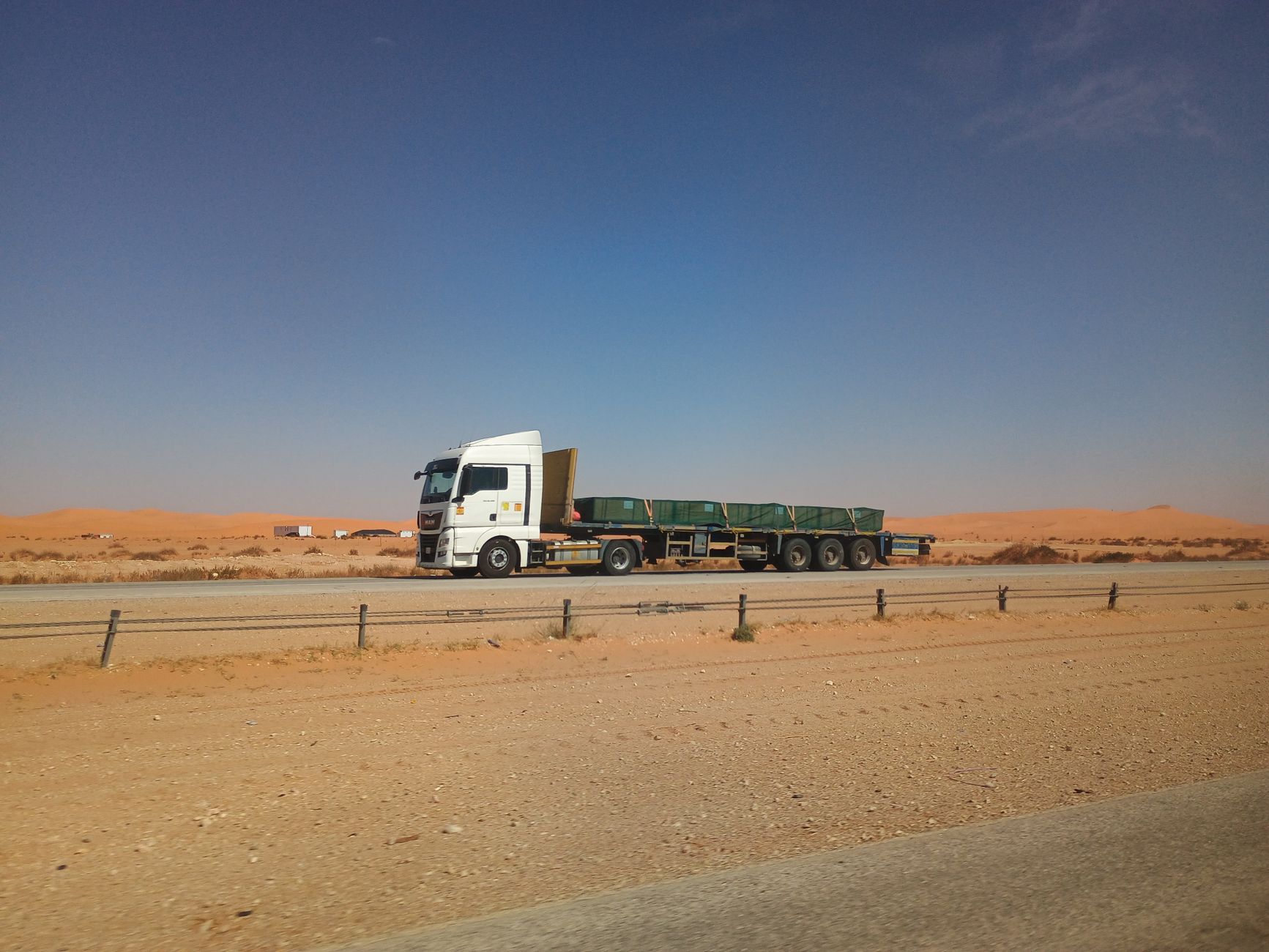
I’ve spent the last two-plus years driving heavy trucks here in the UAE, including cross-border runs into Saudi Arabia, Oman, and Qatar. A lot of people back home ask me the same questions every time I’m on a call with family or friends who are thinking about coming here to drive: “Is it actually worth it?” “What’s the real salary?” “How much can you save?”
So instead of answering the same questions one at a time, I wanted to put it all down in one place — based on what I’ve actually lived, not what a recruitment agency tells you.
The demand is real, but it’s not equal everywhere
The UAE runs on trucks. Every mall, every warehouse, every construction site, every port — it all moves on wheels. Dubai and Abu Dhabi have some of the busiest logistics corridors in the region, and with Jebel Ali Port and the constant construction boom, companies are always looking for drivers who can handle heavy vehicles safely.
But “demand” doesn’t mean every job is a good job. There’s a big gap between:
- Large, established logistics/transport companies — better pay, proper contracts, maintained trucks, more likely to pay on time.
- Small operators and subcontractors — lower pay, older vehicles, sometimes delayed salaries, more pressure to overwork.
If you’re coming here to drive, who you work for matters just as much as what you drive.
What drivers actually earn
Salary ranges vary a lot depending on the type of truck, the company, and your experience level. From what I’ve seen and heard across the industry here:
- Light/medium truck drivers: roughly AED 2,500–4,000 per month
- Heavy truck / trailer drivers: roughly AED 3,500–6,000 per month
- Experienced drivers with cross-border routes (Saudi, Oman, Qatar) or specialized cargo: AED 5,000–8,000+ per month
On top of basic salary, a lot of companies offer overtime pay, and some include accommodation and food, which changes the real value of the offer a lot. Always ask what’s included before comparing two offers — a lower basic salary with free accommodation and food can actually be a better deal than a higher salary where you’re paying for everything yourself.
Where the money actually goes
This is the part people don’t talk about enough. A number like “AED 5,000 a month” sounds great until you break down what a driver’s life here actually costs:
- Accommodation (if not provided): shared labor/worker accommodation can run AED 400–700/month; better shared rooms cost more
- Food: AED 500–900/month depending on how you eat — cooking yourself is much cheaper than buying meals daily
- Phone/data and basic personal expenses: AED 100–200/month
- Transport to/from work (if not company-provided): varies, but this adds up over a month
- Remittance/transfer costs: small, but real if you’re sending money home regularly
If your company provides accommodation and food, your real monthly cost of living can be surprisingly low — sometimes under AED 500 for personal expenses. That’s the single biggest factor in how much you can actually save, more than the basic salary number itself.
So — how much can you realistically save?
Depends entirely on the setup:
- Company provides food + accommodation: you can realistically save 70–85% of your salary
- You pay for your own food + accommodation: savings drop to maybe 30–50%, sometimes less if the salary is on the lower end
This is why two drivers earning the exact same basic salary can end up in completely different financial situations after a year — one saving comfortably, one barely breaking even.
Is it worth it?
For me, honestly — yes, with conditions. It’s steady work, the roads and rules are well organized compared to a lot of places, and if you get into a good company with fair pay and decent living conditions, you can save real money consistently. But it takes research before you sign anything. Ask other drivers already working there. Ask exactly what’s included in the offer. Don’t just look at the headline salary number.
If you’re thinking about coming to the UAE to drive, or you’re already here and trying to figure out if your current setup is a good one, feel free to reach out — happy to share what I know from actually doing this job.
Written from my own experience as a heavy truck driver in the UAE.